
Smooth Dances
Foxtrot
- A smooth progressive dance characterized by long, continuous flowing movements across the dance floor. The dance creates a feeling of elegance and sophistication, being danced to big band (usually vocal) music. Developed in the 1920s, the foxtrot reached its height of popularity in the 1930s, and remains practiced today.

Tango
- A distinctive dance with its corresponding musical style, “Tango music”, began in the working-class port neighborhoods of Buenos Aires (Argentina). It is a representation of the non-verbal struggle between the sexes.

Waltz
- The waltz is a classic and elegant ballroom dance. It uses 3/4 timed music to dance to, making it one of few dances that use 3/4 timing. Despite it’s basic step being a box step, it moves smoothly around the outskirts of the dance floor.
- The Viennese Waltz is much faster than traditional waltz. It is a rotary dance where the dancers are constantly turning with few non-rotating change steps to switch between the direction of rotation.

Latin Dances
Rumba
- Rumba is a romantic Latin dance that originated in Cuba. It is consider to be the oldest of the Latin American dances. The Spanish word “rumbear,”, with which the Rumba gets its name, means “to have fun” or “to party.”
SAlsa
- Salsa is a very sexy Latin dance. Although many styles of tropical music are used to dance the salsa, the “Salsa music” genre is most common. Salsa is a very informal style of ballroom dance, typically seen more out in the wild with “street styles” of Salsa. The salsa is a version of the Mambo (also known as “Salsa on 2”) with a different timing. Common styles of salsa in America include New York style, LA style, and Cuban.
CHA CHA
- Considered to be a flirty Latin rhythm dance of Cuban origin. After people in Cuba began to add extra steps to their salsa dancing, the Cha Cha became its own style of dance with extra “syncopated” steps.

Merengue
- Merengue is a style of Dominican dance. Partners hold each other in a closed position. Partners walk in small steps without letting go each other’s hands, and twist and tie their handhold into intricate pretzels.
Rhythm Dances
Swing
- East Coast Swing is a very common and fun partner dance. Other names include Eastern Swing, Jitterbug, Lindy, and Triple Time Swing. Single Time Swing is a popular variant of E.C. Swing, distinguished by less steps to match faster music.
- West Coast Swing is a partner dance with roots in other types of swing. The distinctive elastic look from the technique is what makes it so different and popular. Many people find themselves interested in W.C. Swing due to increased media popularity with their “Jack and Jill” competitions (where two randomly paired partners improvise together).

Country Dances
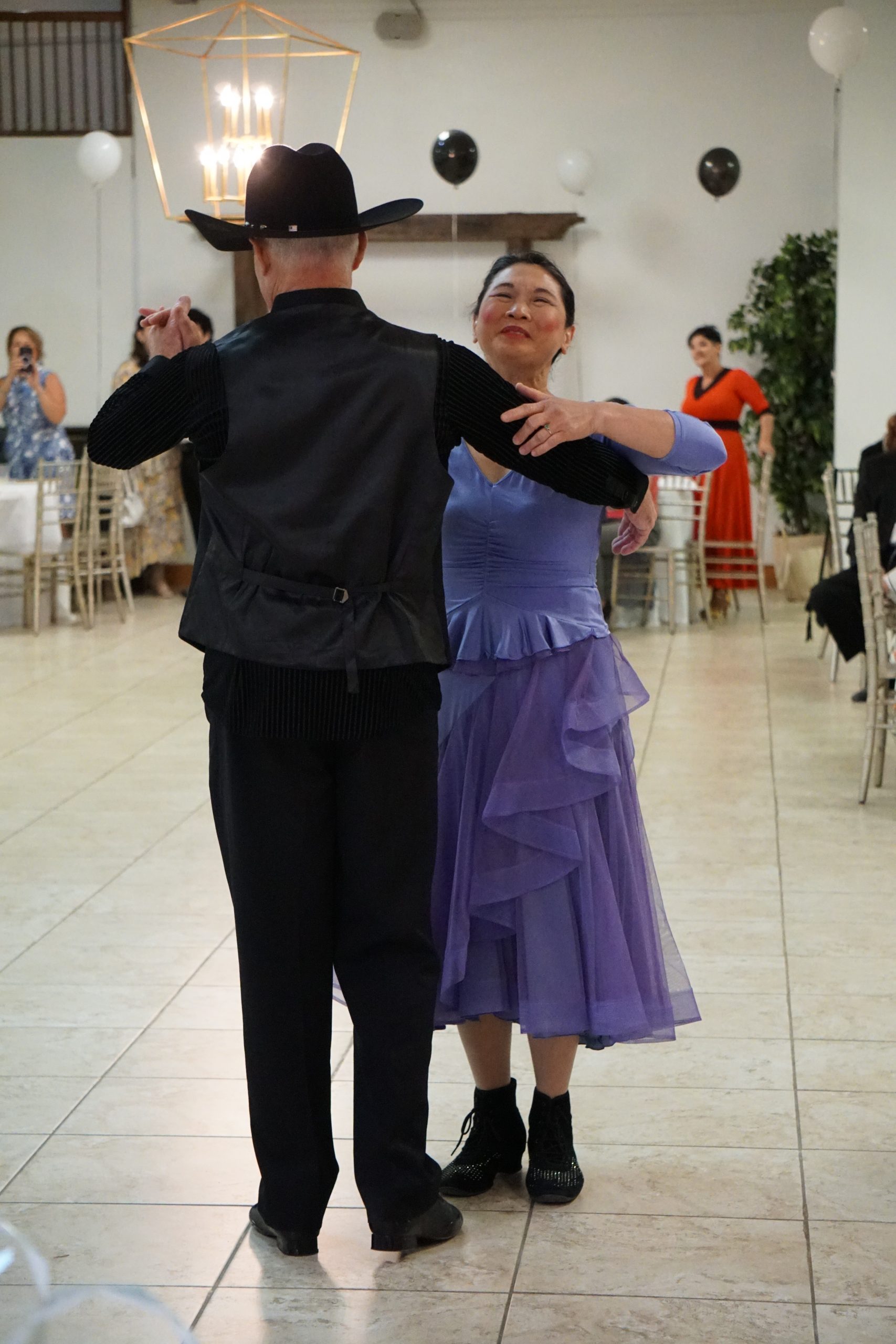
- Country dancing is a more informal, relaxed, and casual style. Country dancing emphasizes smoothness on the dance floor and keeping time with the music. There are many types of Country western, including: Two-step, Shuffle, Cowboy Cha Cha, Waltz, etc. The most popular of which is the Texas two-step.
Cajun Dances
- Cajun Two Step is a style of Cajun dancing that is arguably the most traditional. It is very similar to the country western two-step. The traditional Cajun two-step doesn’t have as many fancy turns and spins as country western.
- Traditional Cajun Jig, the newest form of Cajun dance features a “hobble step” alternating feet like you are stepping on and off a curb. The effect is to facilitate turns and swings reminiscent of jitterbug and swing dancing, or versions of Country Western dancing.
Samba
- Samba is a very lively rhythmic ballroom dance. It is different from the traditional Brazilian styles of samba. Its music is in 2/4 or 4/4 timing. There is a slight bouncing or dropping action with the movements of samba. This is created through movement of the knees. Samba has a specific hip action, making it different from ballroom Latin dances.

QuickStep
- The quickstep is a light-hearted member of the standard ballroom dances. The movement of the dance is fast and flowing. Quickstep is danced to upbeat melodies, making it suitable for both formal and informal events. Quickstep originated in the twenties in New York and was first danced by Caribbean and African dancers. Its origins are slow foxtrot combined with the Charleston (a precursor of swing).
And Much More!